Global DID Numbers in 2025 — The Definitive Buyer’s Guide (Coverage, Compliance by Country, Pricing Models, Porting, and Setup)
 Summary: Direct Inward Dialing (DID) numbers let customers and partners reach the right person or workflow directly—without IVR hoops. This guide explains what DIDs are, how pricing works, the documents you may need in popular markets, how porting works, and an exact setup checklist you can follow today. When you’re ready to deploy, check IllyVoIP Phone Numbers, view transparent pricing, or create your account to get started.
Table of Contents
- What is a DID number?
- DID vs Toll-Free vs SIP Trunking vs Call Forwarding
- DID Pricing Models Explained
- Number Types: Local, National, Toll-Free, Mobile
- Compliance & Registration Basics
- Porting 101: Timelines, LOA, and Common Rejections
- Country-by-Country Mini-Profiles (Quick Requirements)
- Quality & Reliability Checklist
- Security & Abuse Prevention
- Implementation: Step-by-Step Setup
- Troubleshooting Playbook
- Provider Evaluation Checklist
- Simple ROI Calculator Framework
- FAQs
1) What is a DID number?
A DID (Direct Inward Dialing) number is a phone number that routes callers straight to a specific user, queue, or workflow, rather than a central operator or generic IVR. In many regions you’ll also see DDI (Direct Dial-In) used interchangeably. Further reading: vendor-neutral glossaries and regulator resources confirm this definition and use. :contentReference[oaicite:0]{index=0} When to use DIDs- Assign local presence in new markets while keeping a single global voice core.
- Route directly to sales, support, or dedicated account managers.
- Track campaigns by assigning unique numbers to ads or landing pages.
2) DID vs Toll-Free vs SIP Trunking vs Call Forwarding
| Concept | What it is | Best for | Notes |
|---|---|---|---|
| DID (Local) | Geographic or national numbers that terminate to your PBX/CCaaS via SIP. | Local presence, campaign tracking, direct reachability. | Often requires registration documents depending on country and number type. |
| Toll-Free | Caller doesn’t pay; you pay inbound charges. | Customer support & sales in mature markets. | Porting times and surcharges differ from local numbers. |
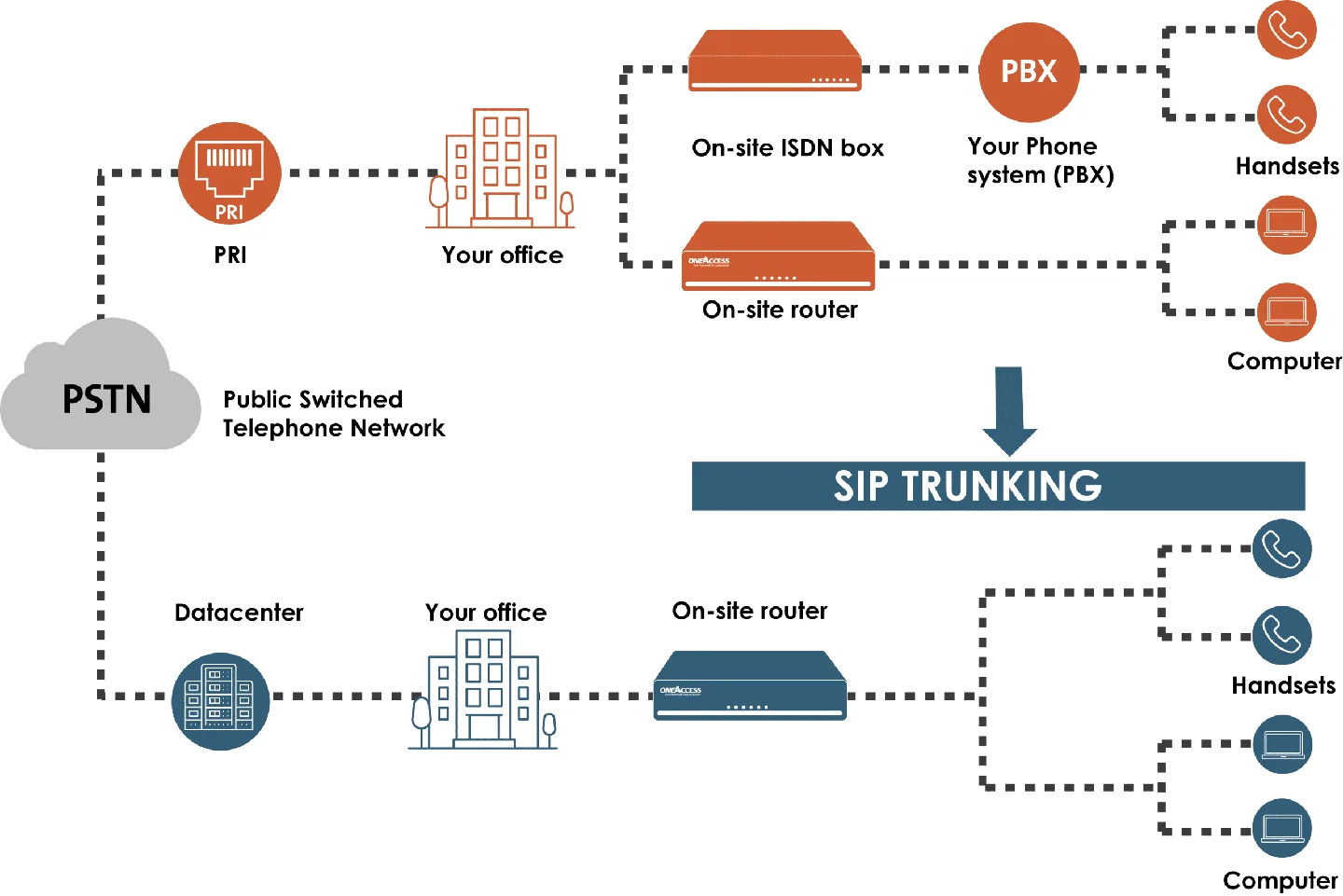
| SIP Trunking | Session capacity (channels/minutes) connecting your PBX to the PSTN. | Scalable inbound/outbound. Attach DIDs as needed. | Plan for concurrency and CPS; add redundancy across routes. |
| Call Forwarding | Simple divert from a number to another destination. | Lightweight, quick pilots. | Less control; can add latency/cost on high volumes. |
3) DID Pricing Models Explained
- Per-Number (Monthly): a monthly fee per DID; sometimes tiered by city/country.
- Inbound Charging:
- Per-minute (metered usage)
- Per-channel (concurrent call paths) — predictable for high usage
- Hybrid (base channels + metered burst)
- One-off Fees: setup, port-in, portability checks, expedited ports.
4) Number Types: Local, National, Toll-Free, Mobile
Local (Geographic): tied to a city/area code; often need an address or company docs. National: non-geographic for nationwide reach; requirements vary. Toll-Free: inbound free to caller; you pay usage/surcharges. Mobile: available in limited markets for voice and/or SMS; additional identity checks may apply. Providers publish requirement catalogs by country and number type. :contentReference[oaicite:1]{index=1}5) Compliance & Registration Basics
Many countries ask for KYC/KYB (identity and business verification), proof of address in the country or region for local numbers, and usage declarations. The precise list depends on country and number type. Reputable providers maintain public, regularly updated requirement guides and APIs. :contentReference[oaicite:2]{index=2} Example: India has tightened KYC expectations for internet telephony services, especially when mobile numbering resources are involved. Always review current DoT notices if operating in India. :contentReference[oaicite:3]{index=3} Example: United Kingdom numbering is overseen by Ofcom; providers must comply with the General Conditions and the National Telephone Numbering Plan for geographic/non-geographic use. :contentReference[oaicite:4]{index=4}Tip: Submitting correct documents at order time drastically reduces provisioning delays. If you’re unsure, ask us to pre-validate your docs before you place bulk orders.
6) Porting 101: Timelines, LOA, and Common Rejections
What you’ll need: Letter of Authorization (LOA), copy of latest invoice/CSR, correct end-user name/address, and accurate number list with formatting. Typical timelines (reference ranges): Local number ports often complete in ~5–7 business days in the U.S., a bit longer in Canada, and vary by country and number type; toll-free ports may differ. Always plan a safety window. :contentReference[oaicite:5]{index=5}- Common rejections: address/name mismatch, losing carrier freeze (PIC/port-freeze), unpaid balance, incorrect BTN/CSR, or unauthorized signer.
- Best practice: request a port-out PIN/CSR when available; align FOC dates with staffing windows.
7) Country-by-Country Mini-Profiles (Quick Requirements)
These short notes are designed to set expectations. Requirements update regularly; we verify at order time, but you should consult current regulator/provider guidance for final confirmation. :contentReference[oaicite:6]{index=6}United States
- Availability: Local, toll-free, many national-style non-geographic ranges via providers.
- Docs: Minimal for most local orders; emergency address for certain services; standard LOA for porting.
- Porting: Local ports commonly ~5–7 business days; wireless sometimes faster. :contentReference[oaicite:7]{index=7}
Canada
- Availability: Local and toll-free; mobile ranges limited through VoIP providers.
- Docs: Standard LOA and recent invoice/CSR for porting.
- Porting: Often slightly longer than U.S. (~7–12 business days). :contentReference[oaicite:8]{index=8}
United Kingdom
- Availability: Geographic and non-geographic numbers regulated under Ofcom plans.
- Docs: Address alignment for geographic ranges may apply; compliance with General Conditions.
- Notes: Ofcom maintains numbering plan and guidance. :contentReference[oaicite:9]{index=9}
Germany & France (EU examples)
- Availability: Geographic and national numbers; local address/company proof may be required.
- Docs: KYC/KYB with local address for geographic numbers is common across many EU markets; vendor catalogs document per-city variations. :contentReference[oaicite:10]{index=10}
India
- Availability: National and service-specific ranges subject to strict licensing and KYC rules.
- Docs: DoT KYC compliance; additional constraints on mobile-number usage in internet telephony/bulk calling. :contentReference[oaicite:11]{index=11}
Australia
- Availability: Geographic and toll-free ranges via providers.
- Docs: KYC/KYB; address alignment for geographic numbers may apply; provider catalogs outline specifics. :contentReference[oaicite:12]{index=12}
Brazil
- Availability: Geographic numbers in many cities; toll-free available via licensed providers.
- Docs: KYB/KYC and local address can be required depending on the city/number type; consult requirement catalogs. :contentReference[oaicite:13]{index=13}
8) Quality & Reliability Checklist
- Monitor ASR, ALOC, and PDD alongside ticket rates per 1k calls.
- Use redundant routing with failover; plan channels and CPS headroom for peaks.
- Test caller ID presentation and inbound media (one-way audio checks) per country.
9) Security & Abuse Prevention
- Enable rate limits and anomaly detection for sudden spikes.
- Validate caller identity rules (local CLIs, STIR/SHAKEN where supported) to reduce labeling/spam issues.
- Maintain least-privilege SIP credentials and rotate periodically.
10) Implementation: Step-by-Step Setup
- Create your IllyVoIP account → Register (or Log in).
- Pick your target countries and number types → shortlist local vs national vs toll-free.
- Prepare documents (KYC/KYB, proof of address, LOA for porting if keeping existing numbers).
- Order numbers → attach to your SIP trunk; map to users/queues/IVRs.
- Configure routing → concurrency, CPS, and failover routes.
- Test inbound reachability, media, caller ID presentation.
- Monitor KPIs (ASR/ALOC/PDD) and iterate.
11) Troubleshooting Playbook
- No ring / 404: Check translations, DID mapping, and trunk ACLs.
- One-way audio: Revisit NAT/SBC and RTP port ranges; confirm codec negotiation.
- Caller ID missing: Verify CLI formatting per country; confirm pass-through on PBX and provider side.
- Porting delay: Re-check LOA/CSR details; request escalation with losing carrier.
12) Provider Evaluation Checklist
- Coverage with live inventory in your target countries/cities
- Transparent requirement catalogs & pre-validation of documents
- Porting desk with clear SLAs and FOC scheduling
- Quality: multi-route, metrics visibility, incident comms
- Security: fraud controls, rate limiting, account protection
- Commercials: clear surcharges, channel options, contract flexibility
13) Simple ROI Calculator Framework
Estimate monthly cost and impact with a quick model:Monthly Cost = (DIDs × Monthly Fee) + (Inbound Minutes × Rate) + (Channels × Channel Fee) + (Porting & Setup One-offs / Amortization)
14) FAQs
What is a DID number?
A local or national number that routes directly to a person or workflow on your system via SIP. :contentReference[oaicite:14]{index=14}How long does porting take?
It varies by country and number type; many local ports complete within roughly 5–7 business days in the U.S., with Canada and toll-free often taking longer. Plan a buffer. :contentReference[oaicite:15]{index=15}Do I need local documents to buy a number?
Sometimes. Many countries require KYC/KYB and, for geographic numbers, proof of a local address. Your provider’s requirement catalog will specify exactly what’s needed. :contentReference[oaicite:16]{index=16}Any special rules in India?
Yes. India has reinforced KYC obligations for internet telephony—review DoT guidance and provider notes before ordering. :contentReference[oaicite:17]{index=17}Already a customer? Log in to order numbers, or explore Voice features.