
Call Detail Records (CDR) show the outcome of your calls. They help you review activity, costs, audio duration and issues that need troubleshooting.
What information does a CDR include?
- Incoming or outgoing direction and call status.
- Date and time in your selected account timezone.
- SIP identity, caller, destination number and available contact information.
- Duration and billed cost.
- Public call reference and available outcome details.
- Recording and analysis options when available for that call.
Open a call to view its details. Not every field or recording option applies to every call.
Understanding SIP codes in call reports
- 200 OK: a successful SIP response. Interpret it with the call status and duration; it does not by itself prove a useful conversation.
- 183 Session Progress: a provisional response during call setup, not a final failure by itself.
- 486 Busy Here: the destination reported busy.
- 404 Not Found: the requested destination was not found by the responding system.
- 403 Forbidden: the request was refused; check the accompanying reason and account policy.
- 500 Server Internal Error: the responding server could not process the request.
Use the complete outcome and response message, not only one intermediate code. See Understanding SIP response codes.
Accessing and exporting your call reports
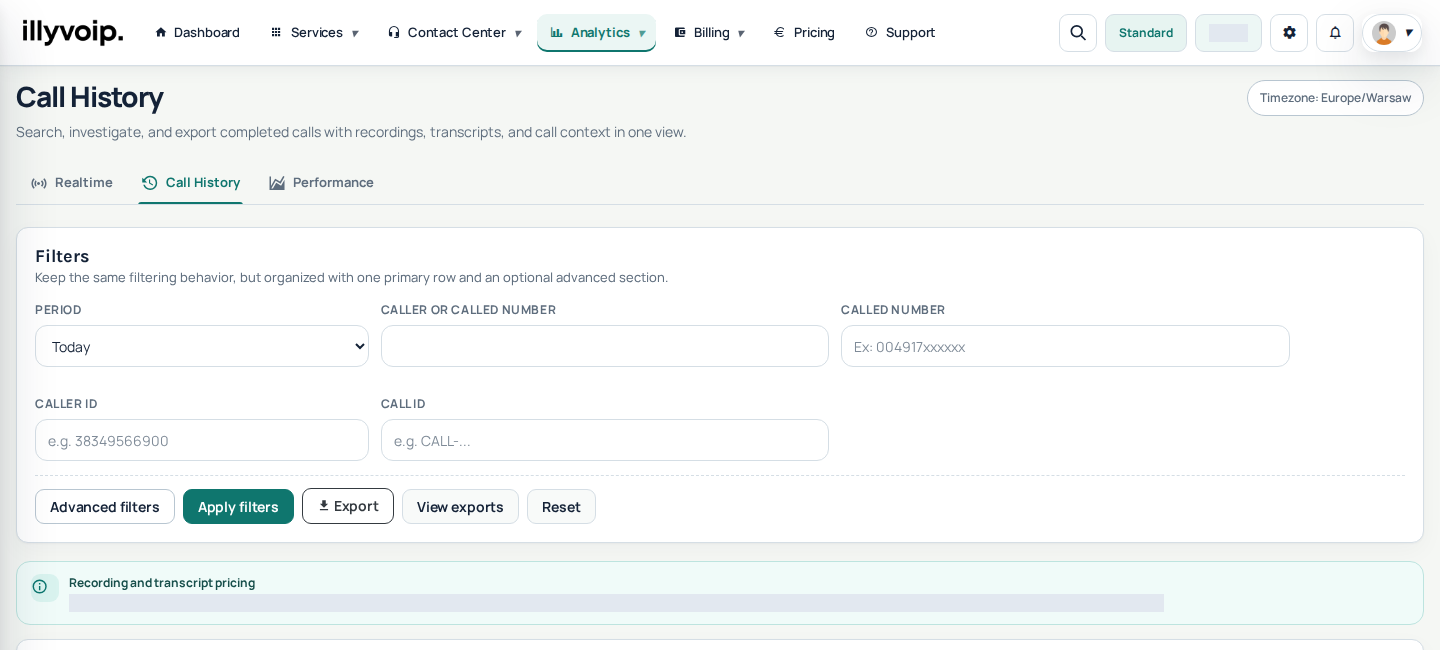
- Open Analytics → Call History.
- Choose the date range and use the available number, identity and status filters.
- Open the call for its detailed result.
- Use the export options offered on the page for the selected report.
Why use call reports?
Review successful and unsuccessful calls, understand your spend and identify recurring destination or device issues. For support, provide the public call reference, time and symptoms. Do not send SIP passwords or unrelated customer records.
Play a recording
Open the call details and use Play when a recording is available. Recording availability depends on the call, recording settings and your access. A completed call does not guarantee that a recording exists. Enabling recording afterward does not recreate past audio.
If the recording is processing, keep the detail or recording view open while its status updates. Do not repeatedly start transcription while the audio is unavailable. If a failure or unavailable state is shown, read its reason; if it persists, contact Support with the public call reference and time.
Transcript and AI summary
- Open the transcript or AI Summary action offered for the call.
- Read the estimate and confirmation before requesting generation; transcription and summary can incur charges.
- If a summary needs a transcript first, the interface explains that sequence. Wait for processing instead of repeatedly submitting the same job.
- Review the result against the recording where available. Automated text can mishear names, numbers or overlapping speech; a summary is not a verbatim transcript.
Voice Agent calls may already have conversation text available in their report. Review that existing material before requesting additional recording-based analysis. Stored text is not proof that every transferred or external part of a call was transcribed.
Make reports useful for your team
Use the date range and available filters to narrow the list before exporting. Compare the public call reference, direction and timestamp when locating a particular call. Talk duration, billing increments and charges are not interchangeable: a rounded billed duration or separate fee can differ from the time displayed for the conversation.
Share recordings and exports only with authorized people. For troubleshooting, provide the public reference and the error shown rather than credentials or unrelated calls. If audio is missing, describe whether the call itself connected and whether one or both parties were audible.
Recording settings and availability
Review Account settings → Recordings for the available recording/transcription controls, current prices and retention notice. Check which features are enabled before relying on a future recording. Enabling a setting does not recreate audio that was never recorded. Disabling a setting is not a request to erase existing recordings.
When a recording is processing, allow the current detail view to update. Do not repeatedly request a paid transcript or summary to solve a recording delay. A failed or unavailable recording is different from one still processing. Voice Agent calls may use their existing conversation for a transcript and summary; do not assume a transcript proves that a complete audio recording exists.
Compare and export the same scope
Use matching dates, timezone, direction and identity filters when comparing call history with reports. Follow the available export workflow and download the completed result; the first visible page is not the entire history. Check any price confirmation before requesting paid analysis. Share only the necessary public call reference and error with Support, and keep recordings and exported customer information private.
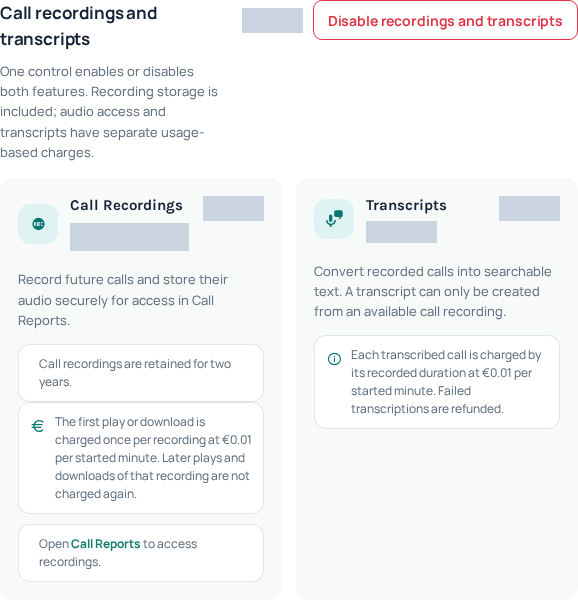
Enable the recording and transcription suite deliberately
- Open the recording settings as an account user with permission to manage them.
- Read the suite status and the individual recording and transcription statuses. Setup incomplete means the two settings are not both enabled; it is different from a fully enabled suite.
- Review the playback price, transcription price and retention notice currently displayed. A recording being present does not make every later playback or analysis action free.
- Use the offered enable action only when you want to enable the suite, and complete its confirmation.
- Return to the settings and verify the saved status. For future calls, apply your organization's recording and notification requirements before relying on the feature.
For example, enabling the suite today can prepare eligible future calls for recording and transcription. It cannot reconstruct a conversation from yesterday that was never recorded.
Work from the call to its transcript and summary
- Open the intended call in Call Reports. Match its reference, time and direction before opening customer content.
- Check whether audio or existing conversation text is available. If audio is still processing, wait for its result first.
- Open the transcript action offered for that call and review its estimate before confirming generation.
- Wait for the job to finish. Read the resulting text and compare important names, numbers or commitments with the recording where available.
- Open the AI summary action if you need a shorter account of the conversation. Review any prerequisite and price confirmation before proceeding.
A transcript is the automated text of available speech; a summary condenses that material. Neither should be treated as an independently verified promise made by the customer. If generation fails, keep the call reference and visible reason. Requesting the same paid analysis repeatedly is not a remedy for missing source audio.
Reviewed 10 October 2026 against the current IllyVoIP Portal and service implementation. Options depend on account access and current service availability.
Find missed calls and understand the unread badge
Use the missed-call view or status filter in Call Reports to review calls that were not answered. The navigation badge is an attention count, not a count of every missed call ever recorded. Keep the reporting period and selected Agent filter in mind when comparing it with the rows currently displayed.
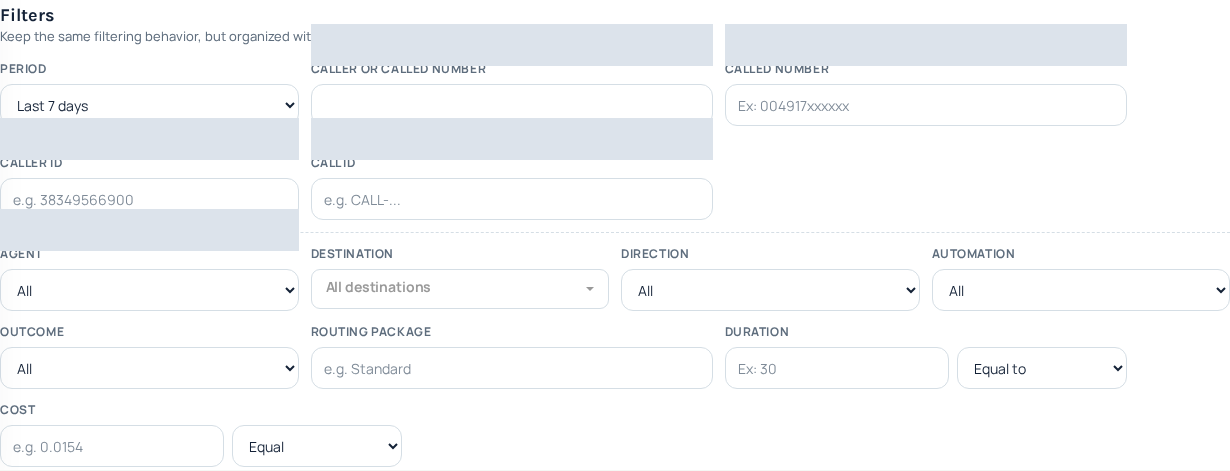
- Open Analytics → Call History and select the missed-call filter offered by the report.
- Check the date range, Direction and Agent filters so you are reviewing the intended calls.
- Read the caller and time, then inspect the call details before deciding whether a callback is appropriate.
- Scroll through the returned rows or additional pages as needed. Only missed-call rows actually visible in the view are acknowledged as viewed.
- Allow the badge to refresh after the server confirms that acknowledgement. A filtered-out or off-screen call may still contribute to the attention count.
Viewed is not the same as handled
Opening the report does not automatically call anyone back, mark a customer issue resolved or acknowledge every hidden historical row. The viewed acknowledgement only records that the relevant missed-call rows were shown. Keep any separate callback or customer follow-up process explicit.
If the badge does not change, check whether the affected rows were actually visible and whether the page completed its request. A failed acknowledgement keeps the count rather than pretending success. Reload when appropriate and check filters before assuming there are duplicate calls. Large counts may be displayed as 99+, so the label is not an exact total above that point.
Investigate repeated missed calls using the actual route
Check whether the incoming number was directed to the intended SIP identity, queue or other destination and whether that destination was ready. A missed call alone does not prove a handset, mobile permission or provider fault. Keep the public call reference and result when asking Support to trace an affected call.
Reviewed 12 October 2026 against the current IllyVoIP controls, implementation and applicable references. Available options depend on account permissions and service state.